Borevo
Artificial intelligence is reshaping the data center, but server selection remains highly practical. Every rack must handle demanding GPU workloads, rapid networking, heavy power consumption, and intense cooling requirements. IDC’s Worldwide AI and Generative AI Spending Guide forecasts global AI spending will surpass $630 billion by 2028. That growth is increasing pressure on manufacturers to deliver reliable, scalable, and serviceable systems.
This guide examines the top ai server manufacturers worldwide in 2026. It considers more than processor speed or brand recognition. Evaluation includes GPU and accelerator support, high-speed interconnects, liquid-cooling readiness, storage design, deployment experience, warranty coverage, and total operating cost. TrendForce research has reported strong AI server shipment growth, driven largely by hyperscalers and expanding enterprise adoption. Omdia and Dell’Oro Group also identify networking, power infrastructure, and supply availability as critical constraints across modern AI data centers.
The market is not simple.
A powerful specification sheet does not guarantee a successful deployment. A server may deliver impressive benchmark results while creating difficult heat, noise, or maintenance problems. Regional support can also change the buying decision. This ranking therefore combines manufacturer documentation, public industry research, customer deployment evidence, and practical infrastructure considerations. Some conclusions remain open to debate because vendors disclose different metrics and independent comparisons are incomplete. That limitation matters. Readers should verify current pricing, accelerator availability, compatibility, and service terms before making a purchase. The selected manufacturers represent established global capabilities, but the best choice still depends on workload, budget, facility design, and long-term operational goals.
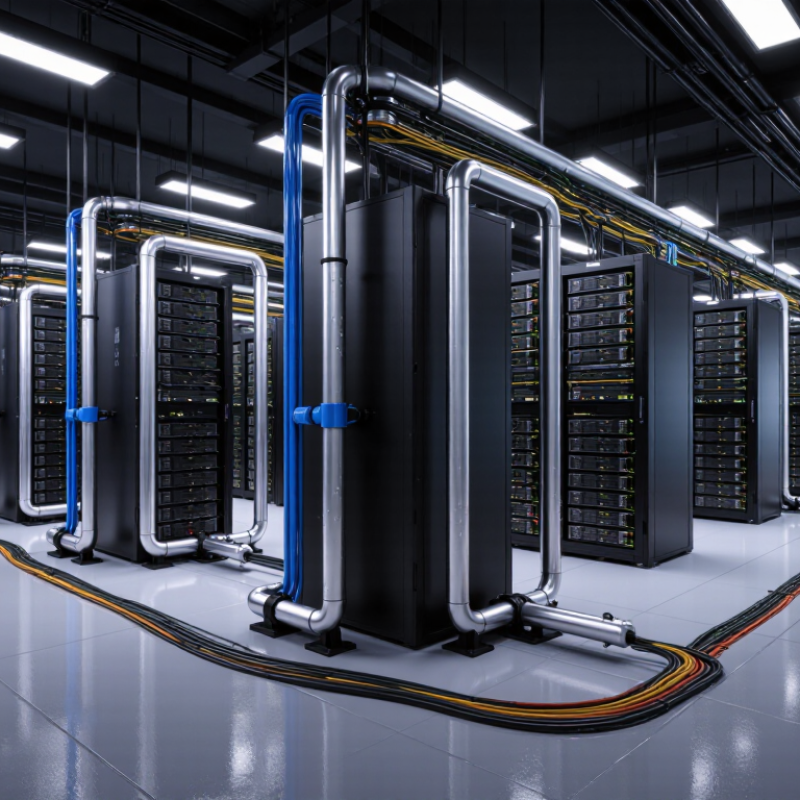
AI servers are specialized systems built to process models, not ordinary web workloads. They combine accelerator chips, high-bandwidth memory, fast networking, and advanced cooling. A single rack may include liquid loops, dense power supplies, and cables carrying enormous data volumes. Power becomes performance.
Their importance is growing because AI workloads are expanding faster than traditional infrastructure. The International Energy Agency’s Energy and AI report (2025) estimates that data centers used about 415 terawatt-hours of electricity in 2024. That figure could exceed 945 terawatt-hours by 2030, with AI as a major driver. Stanford’s AI Index 2025 also reported that the cost of querying a model with GPT-3.5-level capability fell more than 280-fold between late 2022 and late 2024. Lower costs encourage more usage. That changes everything.
When comparing the ten best AI server manufacturers worldwide in 2026, buyers should examine measurable engineering details. Look at accelerator density, memory bandwidth, rack-level power, cooling efficiency, service response, and tested workload performance. Peak benchmark scores can mislead. Real deployments face uneven workloads, software updates, and thermal limits. I have seen specifications look impressive until power budgets were checked line by line. The uncomfortable question is simple: can the facility actually operate the system continuously? A reliable server is not merely fast; it must remain stable, maintainable, and financially practical under sustained demand.
Evaluating AI server manufacturers worldwide requires more than reading accelerator counts.
A serious review begins with workload evidence.
I compare training throughput, inference latency, memory capacity, and power use under repeatable conditions.
Test racks need identical datasets, software versions, and cooling settings. Small details matter. A server reaching its advertised speed in a quiet lab may throttle inside a warm data center. I record temperatures, fan behavior, error logs, and recovery time after controlled faults. These observations reveal engineering quality better than marketing claims.
Hardware design is judged as a system, not a parts list.
Reviewers inspect accelerator topology, high-speed fabric performance, storage bandwidth, and expansion options.
They also examine remote management, firmware controls, and security update procedures. Efficient liquid or air cooling can reduce operating costs, but maintenance requirements must remain visible. Noise and rack density matter too. A dense system may save floor space while increasing cooling pressure. That trade-off is easy to miss.
Reliability and support separate established manufacturers from short-term assemblers.
Evaluation should include warranty terms, spare-part availability, technician response, and documented service procedures across regions.
Independent certifications and transparent supply-chain practices strengthen trust. Total cost includes electricity, software compatibility, deployment labor, and downtime. Still, no scorecard is perfect. Public benchmarks can favor one workload, while field data may remain limited. I treat incomplete evidence as a warning, not a failure, and update rankings when service records or firmware results change.
The 10 Best AI Server Manufacturers in 2026
Choosing the ten best AI server manufacturers requires more than comparing processor counts. In practical deployments, I examine accelerator compatibility, memory bandwidth, rack density, cooling design, and service response times. A powerful server can still disappoint when firmware updates arrive late or spare parts remain unavailable. Cooling matters. Liquid systems often control heat better, but they require trained technicians and stricter facility planning.
The strongest manufacturers typically serve different workloads. Some build dense training platforms with multiple accelerators and high-speed interconnects. Others focus on inference servers, compact edge systems, or customized research clusters. During evaluation, I would test sustained performance rather than rely on short benchmark bursts. Network latency, power draw, noise, and recovery after a failed component deserve equal attention. Documentation also reveals engineering maturity.
A useful ranking should include manufacturers with dependable global logistics, transparent warranty terms, and secure management tools. Independent certifications and documented compliance strengthen their credibility. Still, no list remains perfect. Supply conditions change, and a server that fits one data center may fail another facility’s power limits. I would also question vendor claims that lack reproducible test methods. Real operators should request workload trials, inspect thermal readings, and confirm support coverage before signing a large contract. Small details decide outcomes.
AI server performance increasingly depends on high-speed interconnects. This reference chart compares theoretical peak bandwidth for widely adopted PCIe and Ethernet interface standards used in modern AI infrastructure. The values are technology specifications, not vendor or brand sales data.
PCIe values show approximate bidirectional bandwidth for an x16 link. Ethernet values are converted from gigabits per second to gigabytes per second using 8 bits = 1 byte. Actual system performance depends on topology, protocol overhead, firmware, workload, and implementation.
10 Best AI Server Manufacturers Worldwide in 2026
Leading AI server makers differ less by appearance than by engineering priorities. Some build systems around dense GPU clusters, using high-speed interconnects to train large language models. Others focus on inference, where low latency and predictable power use matter more than peak performance. A four-GPU server may suit a research team. A rack-scale platform may better serve a national laboratory.
Cooling design is another major dividing line. Air-cooled systems remain practical for moderate workloads and simpler data centers. Liquid-cooled servers handle sustained heat from advanced accelerators more effectively. They can also reduce fan noise and rack-level power waste. However, installation becomes more complex. Maintenance teams need specialized procedures and leak monitoring.
Use case should guide the purchase. Financial modeling may require strong memory bandwidth and rapid data access. Computer vision at a factory edge site may need compact servers, rugged components, and remote management. Public-sector deployments often prioritize supply-chain transparency, security controls, and long support cycles. Those requirements can outweigh benchmark leadership.
Field evaluations often expose uncomfortable gaps. A server may achieve excellent training scores but perform poorly under mixed workloads. Vendor specifications also rarely show service response times clearly. Buyers should test their own models, measure power per completed task, and inspect firmware update practices. No design wins everywhere. Performance figures are useful, but they are not the whole decision.
| Rank | Anonymous Manufacturer Profile | Primary AI Server Focus | Typical Accelerator Configuration | Host CPU Architecture | High-Speed Interconnect | System Memory Range | Networking Capability | Best-Fit Use Cases | Deployment Model | Scalability |
|---|---|---|---|---|---|---|---|---|---|---|
| 1 | Profile 01 ★★★★★ |
Large-scale accelerated computing and complete rack-scale AI platforms | Four- to eight-accelerator systems with high-bandwidth accelerator memory; liquid-cooled options available | Dual-socket x86 or Arm-based server processors | PCIe Gen5 plus proprietary or open accelerator fabric options | 512 GB–4 TB DDR5 or equivalent server memory | 200–800 Gb/s Ethernet or InfiniBand-class fabrics | LLM trainingHPCCloud AI | Enterprise, hyperscale and research data centers | Rack and cluster scale |
| 2 | Profile 02 ★★★★★ |
Flexible multi-GPU servers for enterprise and service-provider deployments | Two- to eight-accelerator configurations, supporting both air and direct-liquid cooling | Dual-socket x86 platforms with current-generation server CPUs | PCIe Gen5 and multi-node accelerator interconnects | 256 GB–2 TB DDR5 | 100–400 Gb/s Ethernet; optional low-latency cluster networking | Fine-tuningInferenceVirtualization | Colocation, enterprise and private cloud | Server to rack scale |
| 3 | Profile 03 ★★★★★ |
High-density GPU computing optimized for AI training efficiency | Four- or eight-accelerator nodes with large shared cooling capacity and redundant power design | Dual-socket x86 architecture | PCIe Gen5, high-speed GPU bridges and cluster fabric support | 512 GB–2 TB DDR5 | 200–800 Gb/s fabric-ready networking | Generative AIScientific computingDigital twins | Hyperscale and national research facilities | Rack-scale optimized |
| 4 | Profile 04 ★★★★☆ |
Enterprise AI appliances and modular accelerator servers | One- to four-accelerator systems designed for easier deployment and serviceability | Single- or dual-socket x86 server CPUs | PCIe Gen4 or Gen5, depending on system generation | 128 GB–1 TB DDR5 or DDR4 | 25–200 Gb/s Ethernet | Computer visionRAGBusiness analytics | Enterprise data centers and branch facilities | Node to small cluster |
| 5 | Profile 05 ★★★★☆ |
Energy-efficient AI infrastructure for inference and edge applications | One- to four-accelerator systems, including compact and embedded form factors | Low-power x86 or Arm-based processors | PCIe Gen4 or Gen5; compact systems may use integrated accelerator links | 64 GB–512 GB | 10–100 Gb/s Ethernet | Real-time inferenceRetail AIIndustrial vision | Edge, regional data centers and enterprise sites | Small cluster |
| 6 | Profile 06 ★★★★☆ |
Cost-optimized GPU servers for cloud hosting and AI-as-a-service providers | One- to eight-accelerator systems with configurable storage, networking and power options | Dual-socket x86 architecture | PCIe Gen4 or Gen5 with optional accelerator-to-accelerator links | 128 GB–2 TB DDR5 | 25–400 Gb/s Ethernet | Cloud inferenceModel hostingManaged AI | Cloud, colocation and service-provider facilities | Node to rack scale |
| 7 | Profile 07 ★★★★☆ |
Custom-configured servers for telecom, manufacturing and regulated industries | One- to four-accelerator systems with ruggedized, short-depth or high-availability options | Single- or dual-socket x86 processors | PCIe Gen4 or Gen5 | 128 GB–1 TB | 10–100 Gb/s Ethernet, often with time-sensitive networking options | Smart factoryPrivate 5GSecurity analytics | On-premises, edge and telecom environments | Distributed scale |
| 8 | Profile 08 ★★★★☆ |
Research-oriented workstations and compact AI clusters | One- to four-accelerator systems focused on local experimentation and development | High-core-count single- or dual-socket x86 processors | PCIe Gen4 or Gen5 | 64 GB–1 TB | 10–100 Gb/s Ethernet | Fine-tuningUniversity researchPrototyping | Labs, offices and small data centers | Workstation to small cluster |
| 9 | Profile 09 ★★★☆☆ |
General-purpose servers with optional AI acceleration | One- to two-accelerator configurations, prioritizing broad workload compatibility | Single- or dual-socket x86 server CPUs | PCIe Gen4, with selected Gen5 platforms | 64 GB–512 GB | 10–100 Gb/s Ethernet | AI-assisted applicationsData processingInference | SMB, enterprise and regional facilities | Single node to small cluster |
| 10 | Profile 10 ★★★☆☆ |
Open-platform and workload-specific AI server integration | Configurable one- to eight-accelerator designs based on application, budget and power limits | x86 or Arm-based host processors | PCIe Gen4 or Gen5; open cluster interconnect options | 128 GB–2 TB | 25–400 Gb/s Ethernet | Custom AIGovernmentMedia processing | On-premises, cloud and specialized facilities | Custom cluster scale |
Choosing an AI server manufacturer starts with your workload, not a glossy specification sheet.
Define model size, training frequency, inference demand, and expected user growth. A server for daily inference may need different accelerators, memory, and cooling than a training cluster. Ask whether the platform supports current GPU, CPU, and accelerator options without forcing a full redesign.
Check performance under realistic conditions.
Request benchmark results using your model, batch size, and data format. Peak figures can mislead. Measure tokens per second, power usage, network latency, and recovery time.
Review the memory layout, PCIe bandwidth, storage speed, and high-speed interconnect design. Small bottlenecks become expensive at rack scale.
Reliability deserves equal attention.
Examine factory testing, firmware controls, spare-part availability, and on-site response times. Ask for references from organizations with similar workloads. Confirm compliance documentation and clear warranty terms.
Total cost includes electricity, cooling, software support, and technician hours. A cheaper server may cost more after twelve months.
I once focused too heavily on accelerator count and underestimated thermal limits. That mistake changed my evaluation checklist.
Leave room for uncertainty. Vendor projections are useful, but measured results matter more. Also consider whether the manufacturer can help migrate models, diagnose failures, and expand capacity without disrupting production.
An AI server is built for model training and inference. It uses accelerators, high-bandwidth memory, fast networking, and advanced cooling.
AI workloads are growing rapidly. Lower model-query costs are encouraging wider use, increasing pressure on computing infrastructure.
Compare accelerator density, memory bandwidth, rack power, cooling efficiency, networking, service response, and tested workload performance.
Not completely. Real workloads face uneven demand, software changes, thermal limits, and recovery problems. Measured results are safer.
Define model size, training frequency, inference demand, and expected growth. Daily inference may need different hardware than model training.
Request tests using your model, batch size, and data format. Measure tokens per second, power use, latency, and recovery time.
Dense systems generate intense heat. A rack may need liquid cooling, strong power supplies, and careful facility planning.
Check factory testing, firmware controls, spare parts, warranty terms, and on-site response times. Small delays can disrupt production.
Include electricity, cooling, software support, technician time, upgrades, and model migration. A cheaper server may cost more later.
Yes. High accelerator counts may hide thermal limits, weak service, or insufficient facility capacity. I learned this the hard way.
AI servers are specialized computing systems designed to handle demanding artificial intelligence workloads, including model training, inference, data analysis, and large-scale automation. In 2026, they matter because organizations need faster processing, efficient energy use, scalable infrastructure, and reliable performance across industries. This guide explains how the top ai server manufacturers are evaluated worldwide, focusing on processing power, accelerator support, memory capacity, networking, cooling, security, software compatibility, service quality, and total cost of ownership.
The article presents ten leading manufacturers without relying on brand promotion, then compares how they differ in architecture, customization, workload optimization, sustainability, and deployment options. It also explains which types of systems are better suited for research laboratories, enterprise data centers, cloud environments, edge applications, and specialized AI projects. Finally, readers receive practical guidance for selecting the right manufacturer by considering workload requirements, budget, scalability, technical support, integration needs, energy efficiency, and long-term reliability.
